Year 2026 – Vol. 38 – N.2

2026 TWAS Skill Building Workshop in Accra, Ghana. (Photo: G.Ortolani/TWAS)

Skills in science for Africa

EDITORIAL

Science to enhance preparedness for the next emergency 

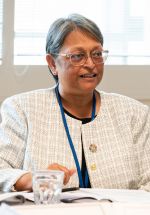
Quarraisha Abdool Karim, TWAS President 

TWAS President Quarraisha Abdool Karim. (Photo: H. Gergolet/TWAS)

The current Ebola outbreak has exposed a familiar reality: We need strong science and delivery systems to rapidly identify, understand, detect, treat and prevent the spread of emerging and re-emerging threats in order to mitigate their social and economic impacts. The lesson is not new, but it remains urgent particularly in the global South that continues to bear a disproportionate burden of infectious disease threats.

Read more
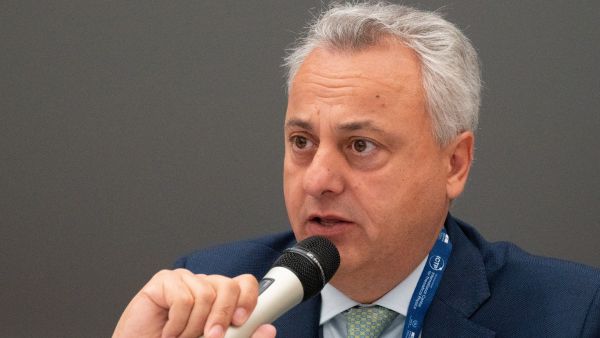
Lamberto Moruzzi, Director for Scientific, Space, and Sports Diplomacy, at MAECI. Photo: G.Ortolani/TWAS)

In a changing world, science diplomacy takes center stage in Trieste

TWAS and the American Association for the Advancement of Science (AAAS) brought together 12 pairs of scientists and policymakers from 13 countries, including Malawi, Paraguay, and Tajikistan, in Trieste, Italy, for the 13th AAAS-TWAS Course on Science Diplomacy (21–23 July). The course deepens relationships between science and diplomacy to enable evidence-based solutions for addressing complex challenges such as climate change, food security, and biodiversity loss.  

Read more

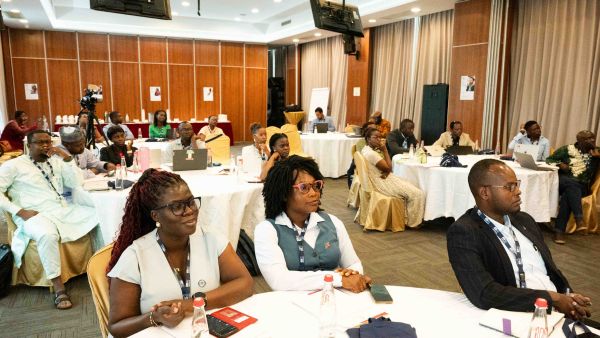
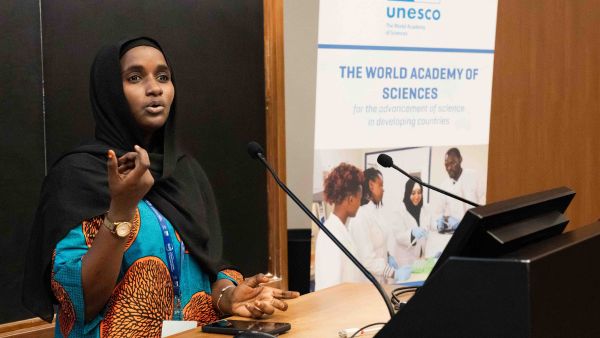
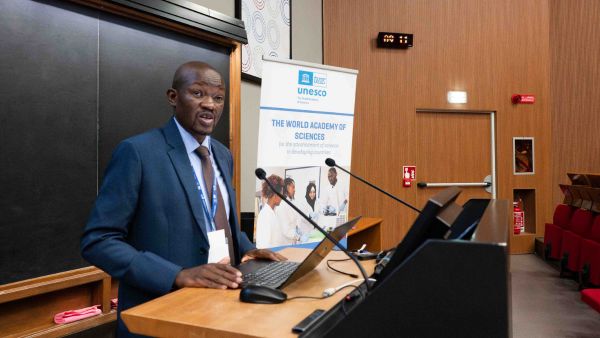
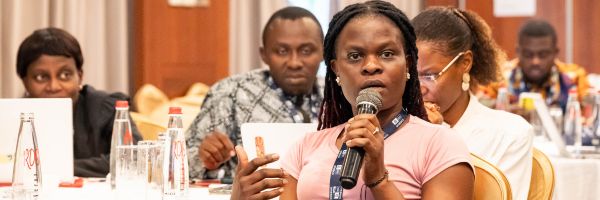
Participants listen to the presentations in Ghana. (Photo: G.Ortolani/TWAS)

TWAS gathers 26 African scientists for a skill building workshop in Ghana

Tuesday 16 June, marked the opening of the 2026 TWAS Skill Building Workshop in Accra, Ghana, running until 18 June. Organized by TWAS, the event brought together 26 early-career scientists supported through the Seed Grant for New African Principal Investigators (SG-NAPI) Programme.

Read more

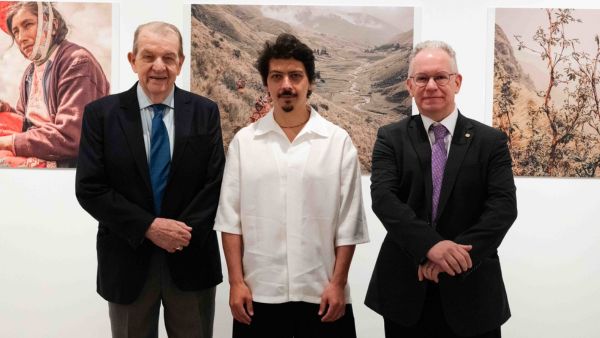
From left: Carlos Vogt, President of the Conrado Wessel Foundation; Musuk Nolte, winner of the inaugural edition of the Through Southern Lenses: Science in Focus competition; and TWAS Executive Director Marcelo Knobel. (Photo: G. Ortolani/TWAS)

Musuk Nolte: documenting ancestral water practices in Peruvian Andes

Musuk Nolte, winner of the inaugural edition of the ‘Through southern lenses: science in focus’ award, is a documentary and artistic photographer whose work focuses on cultural, social, and environmental issues. Through this work, Nolte highlights how tradition and science can come together to improve people’s lives.

Read more

Hajara Kandeh, PhD student at African Institute of Mathematical Sciences-Research and Innovation Center (AIMS-RIC). (Photo: G.Ortolani/TWAS)

Building international networks of climate ambassadors

Many of the regions that are most vulnerable to climate change are in the global South, yet experts from these regions remain underrepresented in the assessments produced by the Intergovernmental Panel on Climate Change (IPCC). The TWAS Climate Training Workshop, made possible through generous support from the David and Lucile Packard Foundation, aimed to address this gap by strengthening the participation and visibility of researchers from the global South in international climate science processes.

Read more

 Ladislaus Chang'a, IPCC Vice-Chair IPCC Vice-Chair Ladislaus Chang'a. (Photo: G. Ortolani/TWAS)

Video: Strengthening global South voices in climate science

Watch the video to learn about the Climate Training Workshop held in Trieste from 5 to 7 May and meet its participants and speakers. Among the attendees were 11 PhD students supported by the TWAS–Sida PhD Scholarships for Climate Research for Students from Least Developed Countries (LDCs).

Watch the video

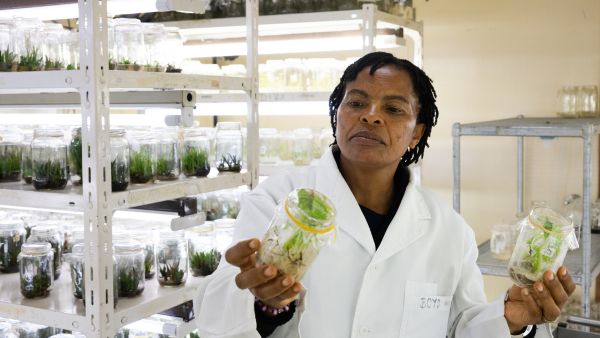
TWAS Research Grant awardee Cecilia Mweu, Jomo Kenyatta University of Agriculture and Technology, showing the plant tissue culture laboratory. (Photo: G. Ortolani/TWAS)

Photo essay: TWAS supporting science in Kenya

Across Kenya’s universities and research institutes, science unfolds in visible, everyday moments: students chatting as they cross campus, seedlings growing in laboratory trays, humanoid robots interacting with people, and researchers at work with microscopes. Through grant programmes supported by Sida and BMFTR, TWAS strengthens researchers and institutions across the country.

Read more

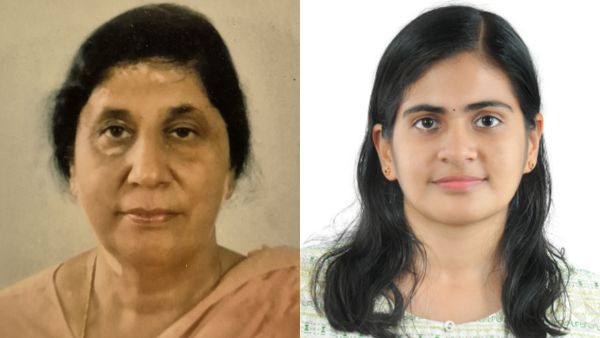
Late Indian virologist Asha Mathur (left) and Valiyaveettil Sreelakshmi, the first-ever recipient of Prof. Asha Mathur Research Fellowship. (Photo provided)

Asha Mathur: a legacy supporting young virologists 

Indian virologist and TWAS Fellow Asha Mathur passed away on 1 August 2024. To ensure that the support she provided in her life to young virologists would continue, her family established the Asha Mathur Research and Education Trust (AMRET), and launched a grant for a postgraduate or postdoctoral researcher of an Indian University. The first AMRET grant recipient is Valiyaveettil Sreelakshmi, who is pursuing her PhD at the National Institute of Mental Health and Neurosciences. 

Read more

WEBINARS

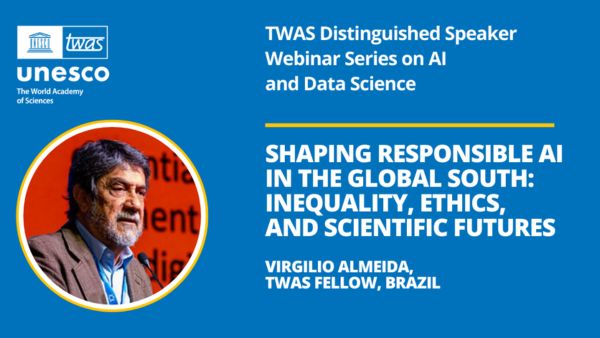
TWAS Fellow, Prof. Virgilio Almeida

Shaping responsible AI in the global South: inequality, ethics, and scientific futures

To explore the opportunities, challenges, and growing impact of Artificial Intelligence, particularly in the global South, TWAS launched a monthly Distinguished Speaker Webinar Series on AI and Data Science. The first webinar featured Virgílio Almeida, a TWAS Fellow and professor emeritus at Federal University of Minas Gerais, Brazil. The event took place on 25 May 2026, and was titled 'Shaping responsible AI in the global South: inequality, ethics, and scientific futures'.

Watch the video

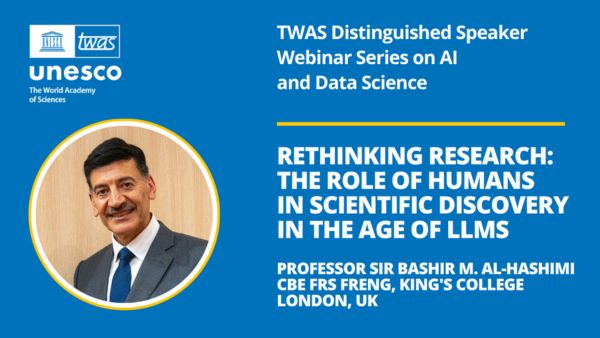
Prof. Sir Bashir M. Al-Hashimi CBE FRS FREng

Rethinking research: the role of humans in scientific discovery in the age of LLMs

The second TWAS Distinguished Speaker Webinar on AI and Data Science featured Prof. Sir Bashir M. Al-Hashimi CBE FRS FREng, a distinguished professor of engineering, academic leader, and entrepreneur. The event took place on 22 June 2026, and was titled 'Rethinking research: the role of humans in scientific discovery in the age of LLMs'.

Watch the video

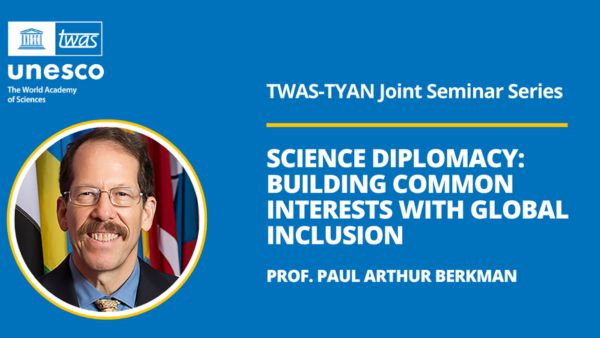
Prof. Paul Arthur Berkman. (Photo provided)

Science diplomacy: building common interests with global inclusion

To provide a framework for addressing shared global challenges and building common interests, TWAS and TYAN have launched a Joint Seminar Series on Science Diplomacy. The first webinar of this series took place on 13 July 2026, and featured Prof. Paul Arthur Berkman, founder and president of the Science Diplomacy Center™ nonprofit in the United States, and associate director of science diplomacy in the Harvard-MIT Public Disputes programme. Berkman delivered a presentation titled ‘Science diplomacy: building common interests with global inclusion’. 

Watch the video

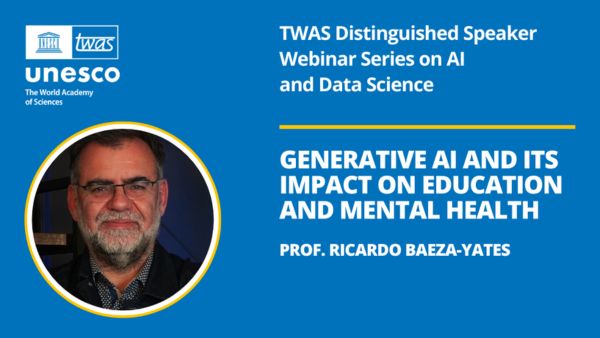
Prof. Ricardo Baeza-Yates. (Photo provided)

Generative AI and its impact on education and mental health

The third TWAS Distinguished Speaker Webinar on AI and Data Science took place on 10 August 2026, and featured Prof. Ricardo Baeza-Yates, a search chief scientist at You.com in San Francisco (USA), and a part-time full professor at KTH Royal Institute of Technology in Stockholm, Pompeu Fabra University in Barcelona, and the University of Chile in Santiago. Baeza-Yates delivered a presentation titled 'Generative AI and its impact on education and mental health'.

Watch the video

TWAS IN ACTION

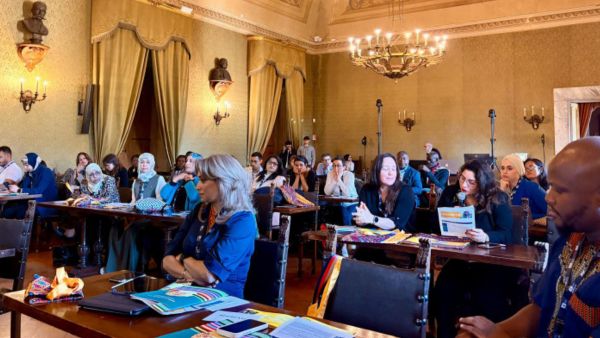
Participants in the conference (Photo: OWSD)

OWSD brings global experts to Rome to address gender and displacement in science

The international conference ‘Sustaining knowledge during crises: gender and displacement in science’ opened on 23 April at Palazzo Corsini in Rome. The two‑day event, convened by the Organization for Women in Science for the Developing World hosted in Trieste by TWAS, brought together 50 researchers, practitioners, and representatives of scientific institutions and embassies from around the world.

Read more

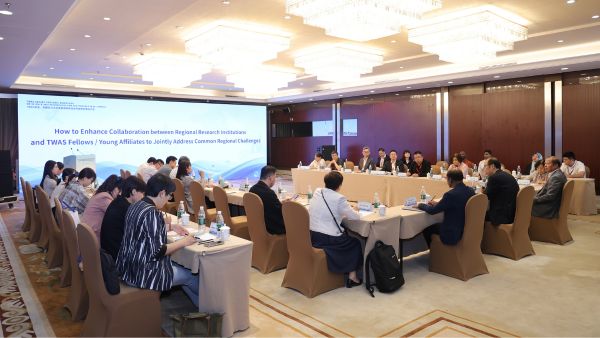
Group discussions during the event. (Photo: TWAS-SAPREP/TWAS TYAN)

TWAS-SAPREP regional workshop on science and technology for sustainable development held in Beijing

The TWAS-SAPREP (TWAS East and South-East Asia and the Pacific Regional Partner) regional workshop on ‘Science and technology for sustainable development’ took place in Beijing on 28–29 May 2026. Bringing together more than 100 participants from 18 countries, the event convened TWAS Fellows, TWAS Young Affiliates, and researchers for academic exchanges and discussions on advancing the Sustainable Development Goals through science, technology, and innovation.

Read more

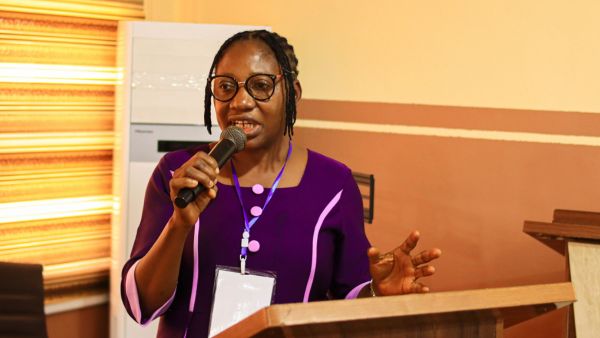
TYAN Member Bolanle Ojokoh, from the Federal University of technology Akure, Nigeria. (Photo provided)

Big data, analytics, and machine intelligence take centre stage in Nigeria

The 22nd TYAN International Thematic Workshop titled ‘From data to impact: inclusive AI solutions for Nigeria and the global South’, organized jointly with the 5th African Symposium in Akure, Nigeria, brought together 84 distinguished academics, researchers, technology experts, and students from Africa and beyond. During the three-day event on 18–20 June, speakers and participants discussed how Artificial Intelligence (AI) and data-driven innovations can have a beneficial impact on the society.

Read more

TWAS is on Instagram

TWAS is now on Instagram 

TWAS is expanding its storytelling to Instagram. Visit our page and follow us to discover the people and science behind TWAS’s mission. 

Read more
TWAS plus

Subscribe to receive TWAS Plus

Would you like to receive timely information on major TWAS upcoming events and career-building programmes, in fields such as research, education, science policy and science diplomacy? Subscribe to receive TWAS Plus six times per year. It's free!

Read more

ACCOMPLISHMENTS

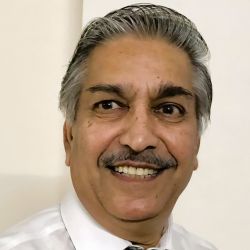
TWAS Fellow Kailash Chander Bansal. (Photo provided)

TWAS Fellow Kailash Chander Bansal receives the Lifetime Achievement Award

Indian biotechnologist Kailash Chander Bansal, elected to TWAS in 2025, is the recipient of the Lifetime Achievement Award, which he received at the international conference on 'Biotech innovations 2026: from discovery to translation', held in Jaipur from 26–28 March 2026. This recognition honours Bansal’s influence and impact in the field of plant biotechnology.

Read more
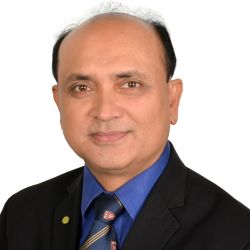
TWAS Fellow Tofazzal Islam. (Photo provided)

TWAS Fellow Tofazzal Islam named dean of graduate studies at Gazipur Agricultural University Bangladesh

Molecular plant geneticist Tofazzal Islam, elected a TWAS Fellow in 2022 and the founding director of the Institute of Biotechnology and Genetic Engineering at Gazipur Agricultural University (GAU), Bangladesh, has been appointed dean of the Faculty of Graduate Studies at GAU for 2026–27. 

Read more
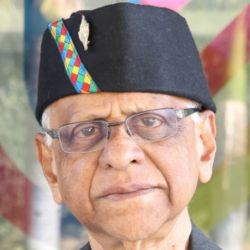
TWAS Fellow Gautam Desiraju. (Photo provided)

TWAS Fellow Gautam Desiraju receives the 14th Ewald Prize in cristallography

Indian chemist Gautam Desiraju, elected a TWAS Fellow in 2002, is the recipient of the 14th Ewald Prize of the International Union of Crystallography. The award is presented every three years and was announced in April 2026.

Read more
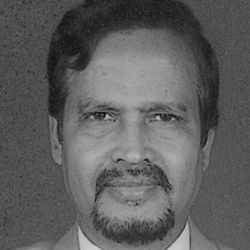
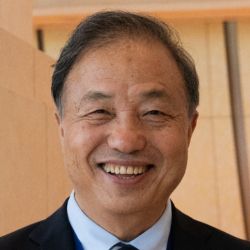
TWAS Fellow Zahurul Karim. (Photo provided)

TWAS Fellow Zahurul Karim awarded Bangladeshi top civilian honour

Zahurul Karim, a TWAS Fellow since 1998 and former secretary to the government of the People’s Republic of Bangladesh, has received the 2026 Independence Award of Bangladesh in the field of science and technology.

Read more
TWAS Fellow Guo Huadong. (Photo: G.Ortolani/TWAS))

TWAS Fellow Guo Huadong receives the 2026 IAF Hall of Fame Award

The International Astronautical Federation (IAF) has named Prof. Guo Huadong—elected to TWAS in 2012 and the director general of the International Research Center of Big Data for Sustainable Development Goals (CBAS)—as the recipient of the 2026 IAF Hall of Fame Award.

Read more

IN MEMORIAM

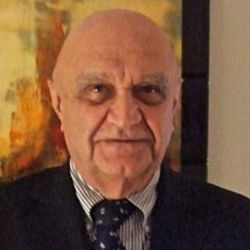
TWAS Fellow Farrokh Saidi.

Prof. Farrokh Saidi (19292026)

Iranian surgeon Farrokh Saidi, elected to TWAS in 1987, passed away on 2 August 2026. A native of the Islamic Republic of Iran, he received his higher education from Cornell University (USA, 1947–1950) and Harvard Medical School (USA, 1950–1954), and he later founded the Iranian Society for the Study of Esophageal Cancer.

Read more
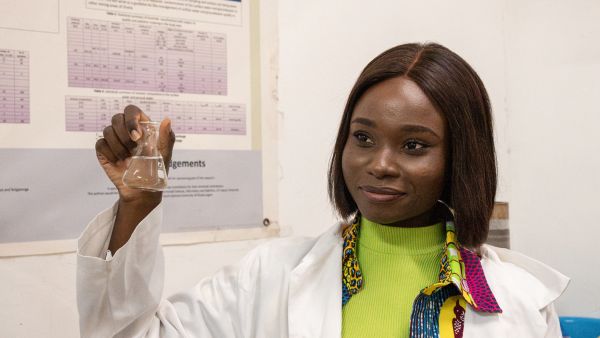
Louisa Preko, Technologist at the National Isotope Hydrology Laboratory, Accra, Ghana. (Photo: G. Ortolani/TWAS)

Support TWAS

A donation contributes to the advancement of science,
engineering, and technology in developing nations.

Support TWAS

The World Academy of Sciences for the advancement of science in developing countries (TWAS) works to support sustainable prosperity through research, education, policy and diplomacy.

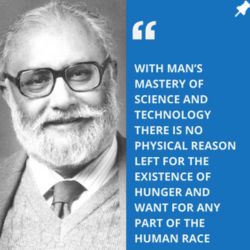
TWAS was founded in 1983 by a distinguished group of scientists from the global South and global North, under the leadership of Abdus Salam, the Pakistani physicist and Nobel laureate. As of January 2026, TWAS had 1,468 elected Fellows representing 112 countries; 11 of them are Nobel laureates. It is based in Trieste, Italy, on the campus of the Abdus Salam International Centre for Theoretical Physics (ICTP).  

Through four decades, the Academy’s mission has remained consistent, namely to:

  • Recognize, support and promote excellence in scientific research in the developing world
  • Respond to the needs of young scientists in countries that are lagging in science and technology
  • Promote South-South and South-North cooperation in science, technology and innovation, and
  • Encourage scientific and engineering research and sharing of experiences in solving major problems facing developing countries.

With its partners, TWAS has graduated over 1,300 PhDs and awarded more than 2,300 postdoctoral fellowships to developing world scientists. The Academy also bestowed over 1,300 prizes, awarded over 2,870 research grants, trained over 850 individuals in science diplomacy, and supported over 1,400 exchange visits.

TWAS hosts and works in association with two organizations, also hosted on the ICTP campus: the Organization for Women in Science for the Developing World (OWSD) and the InterAcademy Partnership (IAP).

At its founding in 1989, OWSD was the first international forum uniting women scientists from the developing and developed worlds. Today, the organization has more than 12,000 members. Their objective is to strengthen the role of women in the development process and promote their representation in scientific and technological leadership.

IAP represents 150 national and regional science and medical academies worldwide. It provides high-quality analysis and advice on science, health and development to national and international policymakers and the public; supports programmes on scientific capacity-building, education and communication; leads efforts to expand international science cooperation; and promotes the  involvement of women and young scientists in all its activities.

TWAS, a programme unit ofUNESCO, receives its core funding from the Italian Ministry of Foreign Affairs and International Cooperation.

TWAS NEWSLETTER
Produced quarterly by The World Academy of Sciences
for the advancement of science in developing countries (TWAS)

Strada Costiera 11, 34151, Trieste, Italy
e-mail: info@twas.org | website: www.twas.org 

TWAS Council: https://twas.org/council 
TWAS Executive Director:
Marcelo Knobel
TWAS Public Information Unit: https://twas.org/press-room

Facebook iconTwitter iconLinkedIn iconFickr iconYouTube iconInstagram icon

Unsubscribe
Copyright © 2026 The World Academy of Sciences